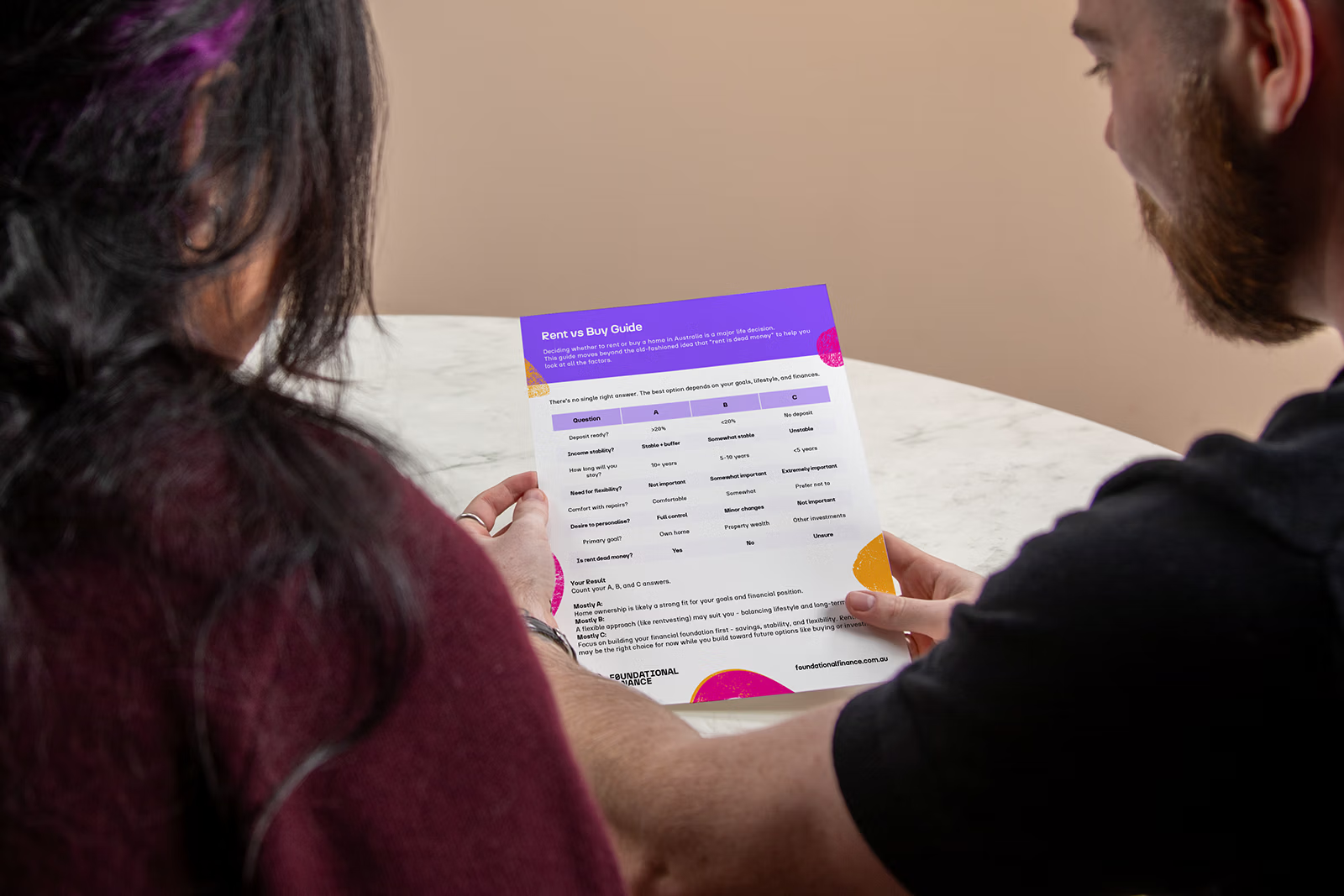
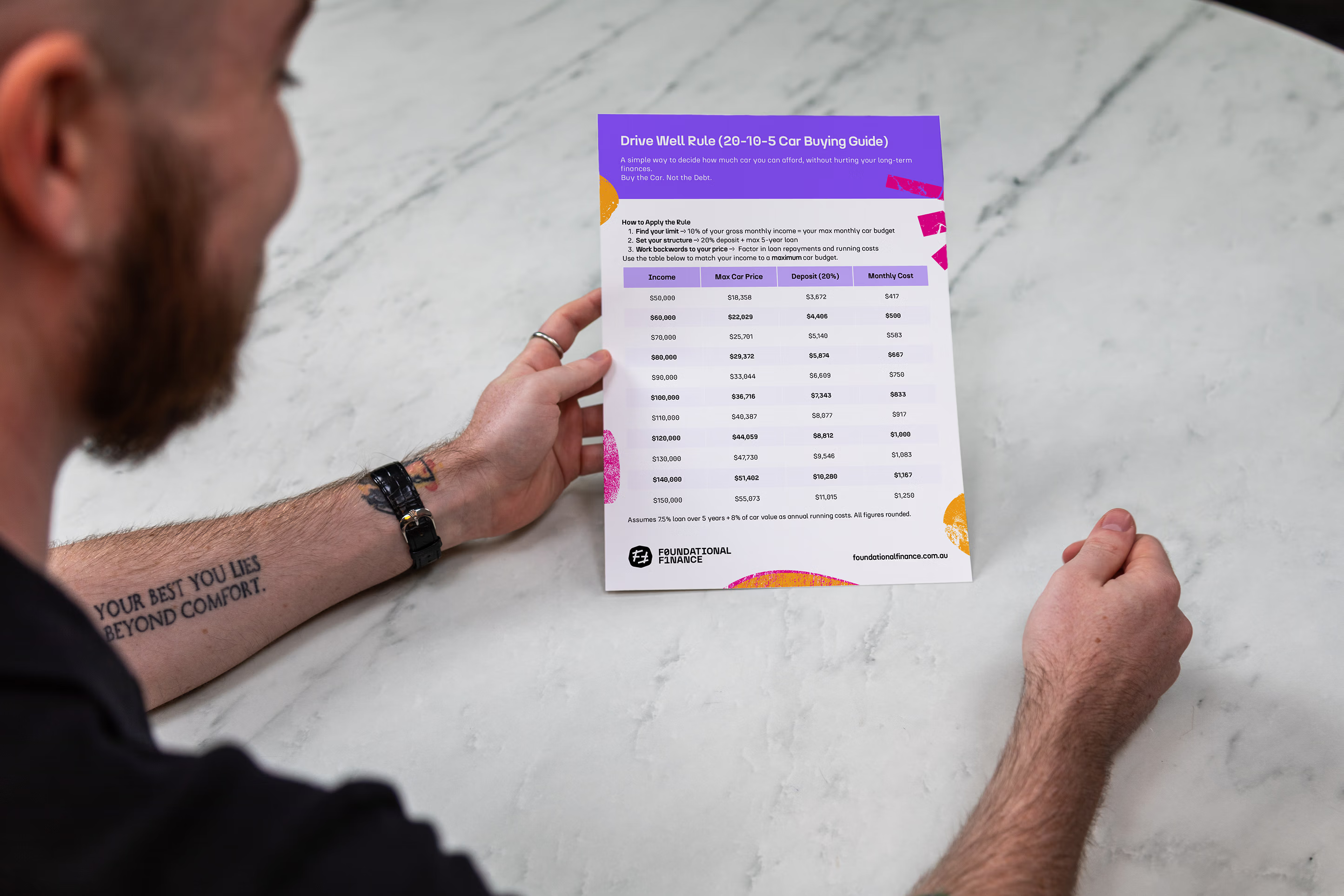
Making Financial decisions
Start with clarity.
Download your FREE resource to make better financial decisions, without overthinking them.
It’s not about perfect decisions
Most people don’t struggle with money.
They struggle with decisions.
Spend or save.
Wait or act.
Enjoy now or plan ahead.
So, they hesitate. Or second guess. Or avoid it altogether.
It’s not a discipline problem.
It’s a lack of structure.
A better way to think about it
Good decisions sit in the middle.
Between structure and intent.
- Structure → what makes sense financially
- Intent → what actually matters to you
Lean too far either way, and it breaks.
- Too structured → restrictive
- Too flexible → reactive
The goal is simple:
Move your life forward and feel good doing it.
A simple decision framework
Most people ask:
“Can I afford this?”
It’s a useful question.
But it’s not enough.
A better one is:
“Is this a good decision for my life, right now?”
Understand the real cost
It’s never just the price.
Every decision costs something.
- Money
- Time
- Energy
- Trade-offs
What does this delay?
What does it replace?
Clarity here removes regret later.
Acknowledge the friction
If it feels heavy, there’s a reason.
That hesitation usually points to something underneath:
- Fear of going backwards
- Uncertainty about the future
- Concern about getting it wrong
Don’t ignore it.
Name it.
When you do, it loses weight.
Look at the upside
Now shift forward.
If this works out, what improves?
- Flexibility
- Progress
- Quality of life
- Reduced stress
Most people focus on what they might lose.
And miss what they could gain.
Pressure test it
Bring it back to reality.
Is this outcome actually achievable, for you?
Not ideally.
Not hypothetically.
Based on how you really operate.
You don’t need certainty.
Just enough confidence that it’s realistic.
Make the call
At this point, it’s simpler.
Do the benefits outweigh the costs, right now?
If yes:
Move forward. Commit. Don’t revisit it.
If no:
Pause. Adjust. Or walk away.
Without guilt.
This is how progress compounds
Good decisions don’t come from guessing.
They come from having a process.
Something you can return to, again and again.
Over time, this leads to:
- Less overthinking
- Fewer reactive choices
- More confidence
- Better alignment between money and life
The bigger picture
Financial progress isn’t one perfect decision.
It’s many good ones.
Made consistently.
Over time.
Start with Clarity
Download your Financial Decision Framework and make your next decision with confidence.
Think clearly. Decide once. Move forward.
Go deeper
Build on these foundations with practical guides.